


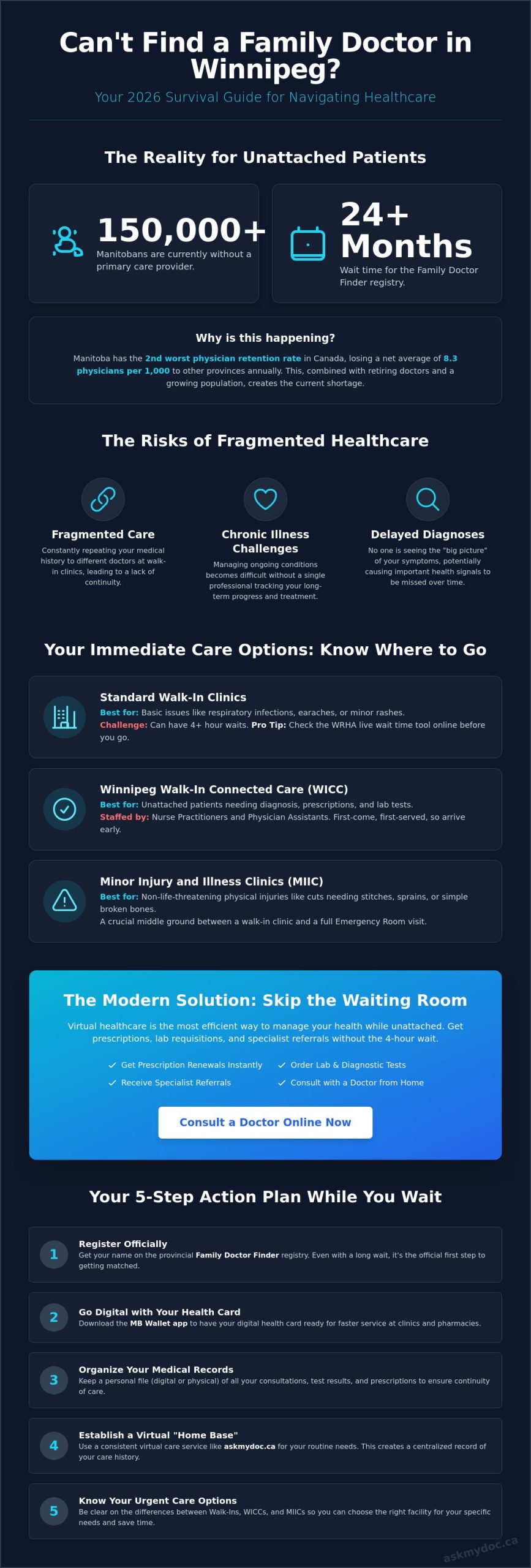
Over 150,000 Manitobans currently lack a primary care provider, and registry wait times for the Family Doctor Finder often stretch beyond 24 months. If you’re wondering what to do if you can’t find a family doctor in Winnipeg, you’re likely tired of the four-hour waits at walk-in clinics just to secure a basic prescription renewal. It’s frustrating to feel like your health is on a permanent waitlist while you struggle to find a reliable professional who actually has the time to listen.
We believe that accessing medical care should be a seamless experience, even during a provincial shortage. This 2026 guide promises to reveal the most efficient ways to bridge the gap in your care and get the medical attention you deserve right now. You’ll learn how to use the new MB Wallet app for your digital health card, how to access virtual consultations for specialist referrals, and the best strategies for securing maintenance medications without the traditional waiting room headache.
Key Takeaways
- Understand the 2026 healthcare environment in Winnipeg and why being an unattached patient requires a more proactive approach to your medical records.
- Identify the specific differences between standard walk-in clinics and Minor Injury and Illness Clinics to ensure you choose the right level of care for your symptoms.
- Learn exactly what to do if you can’t find a family doctor in winnipeg, including how to use virtual consultations to bridge the gap for prescriptions and lab orders.
- Master the Family Doctor Finder registry and discover how the MB Wallet app simplifies accessing your digital health card for faster service.
- Implement a 5-step action plan to maintain your health continuity and keep your medical history organized while waiting for a permanent provider.
The Reality of Finding a Doctor in Winnipeg in 2026
Being an “unattached patient” in Winnipeg means you don’t have a formal, ongoing relationship with a primary care provider. Within the Canadian healthcare system, this status often leaves you feeling stranded in a sea of paperwork and waitlists. You aren’t alone; over 150,000 Manitobans currently find themselves in this exact position. Understanding what to do if you can’t find a family doctor in winnipeg starts with a clear distinction: finding a permanent clinic is your long-term objective, but getting professional medical care is an immediate requirement.
The provincial Family Doctor Finder program is intended to bridge this gap, but the reality is often discouraging. Wait times for a placement can now stretch beyond 24 months. It’s completely valid to feel frustrated or even ignored when your registration sits in a queue for years. While the government works on recruitment, your health concerns don’t pause. You deserve access to care that doesn’t involve a two-year wait or a day spent in a crowded lobby.
Why is it so hard to find a family doctor right now?
Winnipeg’s medical landscape is undergoing a massive shift toward “Home Clinics.” These are team-based environments designed to provide comprehensive care, but the transition takes time and resources. At the same time, our city’s population is growing while a wave of experienced physicians reaches retirement age. Manitoba currently faces a retention crisis, holding the second-worst physician retention rate in Canada. We lose a net average of 8.3 physicians per 1,000 to other provinces annually. When a clinic’s status changes to “not accepting new patients,” it’s often because they’re struggling to replace departing staff or manage an overwhelming administrative burden.
The risks of being an unattached patient
Operating without a central health hub creates significant hurdles for your long-term wellness. Managing chronic illnesses becomes difficult when there’s no single professional tracking your progress over time. You might find yourself caught in the “walk-in clinic loop,” repeating your entire medical history to a different doctor every time you need a basic prescription renewal. This fragmentation increases the stress of managing your health and can lead to delayed diagnoses because no one is looking at the “big picture” of your symptoms. Knowing what to do if you can’t find a family doctor in winnipeg involves finding reliable ways to maintain this continuity yourself until a permanent spot opens up.
Immediate Alternatives: Walk-In Clinics and MIICs
When the long-term wait for the Family Doctor Finder program isn’t an option, Winnipeg offers several physical points of entry for medical care. Most residents instinctively head to a standard walk-in clinic for urgent needs. These facilities handle basic concerns like respiratory infections or earaches, but they often reach capacity within minutes of opening. To avoid “clinic fatigue,” you need a more strategic approach to what to do if you can’t find a family doctor in winnipeg.
Efficiency is the primary goal when navigating these physical systems. The Winnipeg Regional Health Authority (WRHA) provides a live online wait time tool that updates frequently. Check this dashboard before leaving your house to see which location has the shortest queue. Even with these tools, physical wait times can still exceed four hours during peak flu season. If you are seeking a quick solution for a prescription renewal or a sick note, you might prefer to consult a doctor online to avoid the lobby entirely.
Winnipeg Walk-In Connected Care (WICC) locations
WICC clinics are a specialized alternative to standard walk-ins. They are staffed primarily by Nurse Practitioners and Physician Assistants who have the authority to diagnose, prescribe, and order diagnostic tests. Locations like Access Winnipeg West and Access Fort Garry are specifically designed to support patients who lack a permanent provider. Because these clinics operate on a first-come, first-served basis, the daily queue often starts well before the doors open. Arriving early is essential to securing a spot in the daily schedule.
Minor Injury and Illness Clinics (MIIC)
If your concern involves a physical injury that isn’t life-threatening, a Minor Injury and Illness Clinic is your best destination. These clinics handle issues that are too complex for a standard walk-in but don’t require a full emergency room visit. Common reasons to visit an MIIC include:
- Simple cuts requiring stitches or professional dressing.
- Strains, sprains, or suspected minor bone fractures.
- Minor burns or skin infections.
The Corydon and North End locations serve as the primary hubs for these services. Choosing an MIIC over the ER for these specific issues typically results in a much faster experience for you while keeping hospital beds available for critical emergencies. Always bring your Manitoba Health Card and a list of your current medications to help the practitioner understand your health background quickly.
Bridging the Gap with Virtual Healthcare in Manitoba
While you remain registered with the Manitoba Family Doctor Finder program, your medical needs don’t stop. Waiting months or even years for a permanent placement shouldn’t mean a gap in your primary care. Virtual healthcare has emerged as the essential bridge for thousands of Winnipeggers who need professional advice without the delay. It offers a streamlined way to bypass the germ-filled waiting rooms of traditional clinics; this is especially vital during the peak of cold and flu seasons. AskMyDoc serves as a secure, local connection to licensed Manitoba physicians who understand our specific provincial health system. This modern approach ensures you receive expert care from the safety of your home, effectively solving the dilemma of what to do if you can’t find a family doctor in winnipeg for your day-to-day health needs.
Digital care is not just a temporary fix; it’s a fully integrated part of the Manitoba health framework. One of the most reassuring aspects for patients is that seeing an online doctor in Manitoba is fully covered by your provincial health card. You receive the same high standard of professional attention as an in-person visit, but without the logistical stress of travel and long queues. It’s a purposeful solution that respects your time and your health.
How virtual appointments work for unattached patients
The process is designed for maximum clarity and ease of use. You can book a same-day slot online and connect with a physician via video or phone in minutes. Have your paper card or the digital version from the MB Wallet app ready for the billing process. Every visit creates a secure digital record, helping you maintain a ‘mini-history’ of your care. This documentation is invaluable for your own records. It ensures your medical story isn’t lost while you move between different providers, providing a sense of continuity that is often missing for unattached patients.
Prescriptions and referrals without a family doctor
One of the most significant hurdles for unattached patients is maintaining medication schedules. Virtual physicians can renew prescriptions in Manitoba and send them directly to any pharmacy in Winnipeg. This eliminates the need to spend half a day at a walk-in clinic just for a basic refill. Beyond renewals, virtual doctors can issue lab requisitions for blood work or specialist referrals based on your symptoms. It’s a comprehensive way to manage your health proactively. However, virtual care does have its practical boundaries. If your condition requires a physical examination, such as checking lung sounds or palpating a new injury, the doctor will guide you to a physical facility. For the majority of non-emergency concerns, this digital route is the fastest, most reliable answer for what to do if you can’t find a family doctor in winnipeg.
Official Steps: Navigating the Family Doctor Finder
The formal path to securing long term care starts with the provincial registry. While previous sections of this guide explored immediate alternatives, the Family Doctor Finder remains the primary vehicle for permanent placement within the Winnipeg Regional Health Authority (WRHA). The system aims to match you with a “Home Clinic,” which is a central hub where a team of professionals manages your health records and long term wellness. To streamline your search, you should utilize the latest Physician Listing Manitoba resources. These tools help you understand what to do if you can’t find a family doctor in winnipeg by identifying which clinics are currently building their patient bases.
One critical piece of advice often missed by standard government portals is the importance of updating your status. If your health situation changes, such as a new chronic diagnosis or a pregnancy, you must contact the registry to update your file. High needs patients are often prioritized. Simply waiting in the queue without communicating changes can lead to unnecessary delays. If you need immediate support for a new health concern while your registration is pending, you can book a virtual consultation to ensure your needs are addressed by a professional today.
Registering with the Family Doctor Finder
You can register for the program online or by calling the Winnipeg office at 204-786-7111. The phone line is often the best choice if you have specific questions about your eligibility or need to explain a complex medical history. Before you call or log in, ensure you have the following information ready:
- Your 9-digit Manitoba Health personal health identification number (PHIN).
- Your current home address and contact details.
- A brief summary of your medical history and any ongoing medications.
Once registered, the reality is that you will likely join a waitlist that can exceed 300 days for some residents. This wait is why a multi-pronged approach to your health is so essential.
Proactive tips for your doctor search
Your 2026 Action Plan: Managing Your Health While You Wait
Waiting for a permanent provider doesn’t mean your health management has to be reactive. By taking control of your medical documentation and utilizing available digital tools, you can maintain a high standard of care. This action plan outlines what to do if you can’t find a family doctor in winnipeg right now; it ensures you don’t fall through the cracks of the provincial system while the registry process moves forward. You have the power to be an active participant in your wellness journey rather than a passive name on a waitlist.
- Register with the provincial finder and update your profile if your health status changes.
- Create a physical or digital folder for all medical results, specialist letters, and notes.
- Identify the nearest Minor Injury and Illness Clinic (MIIC) for physical needs that aren’t emergencies.
- Establish a relationship with a single virtual care platform to serve as your primary digital record.
- Partner with a local pharmacist for medication reviews and guidance on minor ailments.
Organize your medical history
Being your own advocate starts with rigorous organization. When you’re an unattached patient, you are effectively the custodian of your own medical story. Keep a current list of every medication you take, including the exact dosage and frequency. Don’t rely on memory for past surgical history or significant allergies; write them down clearly. You should also request and store copies of recent lab results or imaging reports, such as X-rays and MRIs. Having these ready to share during a consultation saves time and prevents redundant testing. Try to summarize your current health status in a single, clear sentence. This helps any temporary doctor understand your primary concerns immediately.
Use virtual care for continuity
Consistency is the foundation of safe medical care. While you might see different physicians at a physical walk-in clinic, using the same virtual platform allows you to build a cohesive digital history. This “mini-file” ensures that the doctor you speak with today can see the notes from your visit last month. It’s much safer to schedule regular “check-in” appointments for chronic issues rather than waiting for a symptom to become a crisis. Staying ahead of your health needs reduces anxiety and gives you more control over your wellness. You can book a same-day appointment with AskMyDoc to bridge your care gap today and start building that vital continuity.
Your local pharmacist is a highly trained member of your healthcare team who is often underutilized. In Manitoba, pharmacists can help with smoking cessation, provide various vaccinations, and offer advice on managing minor ailments. They are an excellent resource for explaining drug interactions or helping you navigate a temporary prescription lapse while you wait for a consultation. Remember that while the provincial system has its challenges, you have the tools to navigate it successfully. By staying organized and leveraging modern technology, you ensure your health remains a priority. You’re your own best advocate, and with a proactive plan, you can manage your care with confidence.
Take Control of Your Healthcare Journey
Winnipeg’s medical landscape in 2026 presents real challenges, but you don’t have to wait for a registry match to receive professional care. By staying organized with your own medical history and knowing exactly what to do if you can’t find a family doctor in winnipeg, you can navigate the provincial system with confidence. While physical walk-ins and MIICs remain essential for urgent physical needs, virtual platforms offer a faster, more convenient way to manage your ongoing health requirements and maintain continuity.
You deserve access to medical professionals who value your time and autonomy. We provide a direct bridge to licensed Manitoba physicians who can handle your prescription renewals, specialist referrals, and lab orders without the traditional wait times. These secure and private video consultations are fully covered by Manitoba Health, ensuring you get the expert care you need today from the comfort of your own home. Our same-day appointments mean your health concerns are handled with both impressive speed and expert care.
Book a same-day virtual appointment with a Manitoba doctor and experience a more efficient way to manage your health. You are your own best advocate, and we’re here to support you every step of the way.
Frequently Asked Questions
Is seeing an online doctor in Winnipeg free with my Manitoba Health card?
Yes, virtual care consultations with a licensed Manitoba doctor are fully covered by your Manitoba Health Card. There is no out of pocket cost for medically necessary appointments. This ensures you can access professional advice, prescriptions, and lab orders without financial barriers, even if you don’t have a permanent clinic relationship yet.
How long is the average wait for the Family Doctor Finder in 2026?
The average wait time for the Family Doctor Finder program in Winnipeg can currently exceed 24 months. While some residents are matched within 300 days, the high demand for primary care has created a significant backlog. Understanding what to do if you can’t find a family doctor in winnipeg is essential for managing your health during this extended waiting period.
Can an online doctor renew my blood pressure or asthma medication?
Yes, virtual physicians can renew maintenance medications for chronic conditions like asthma or high blood pressure. After a brief consultation to review your history and current health status, the doctor can send your prescription directly to any pharmacy in Winnipeg. This is a safe and efficient way to ensure you never experience a gap in your necessary treatments.
What should I do if I have a medical emergency and no family doctor?
If you experience a medical emergency, you must call 911 or go to the nearest Emergency Department immediately. You do not need a family doctor to receive life saving care at a hospital. For non-life-threatening issues that still require an in person exam, such as a deep cut or a suspected sprain, visit a Minor Injury and Illness Clinic (MIIC) instead.
Can I get a referral to a specialist in Winnipeg if I only use virtual care?
Yes, virtual doctors can provide referrals to specialists after conducting a thorough assessment of your symptoms. They can also issue requisitions for blood work or diagnostic imaging like X-rays. This ensures that your specialized care remains on track while you wait for a permanent placement, providing a vital bridge in the provincial healthcare system.
Are there any doctors in Winnipeg currently accepting new patients?
While the shortage is widespread, new clinics in expanding neighborhoods like Sage Creek or Waverley West occasionally open their lists to new patients. You should check the official provincial registry regularly and contact local clinics directly to ask about their current status. Proactive searching is often the most effective strategy for what to do if you can’t find a family doctor in winnipeg.
Can a virtual doctor provide a sick note for my employer in Manitoba?
Yes, virtual physicians can issue sick notes or medical notes if they determine you are unable to work due to illness. These documents are usually delivered to you digitally following your appointment. It is standard practice in Manitoba for clinics to charge a small administrative fee for these forms, as they are considered an uninsured service not covered by provincial health cards.
What happens if I move to Winnipeg from another province without a health card yet?
If you have just moved to Manitoba, your previous province usually provides health coverage for the first three months of your residency. You should apply for your Manitoba Health Card as soon as you arrive to avoid any gaps in coverage. Once you have your new health number, you can register for the Family Doctor Finder and utilize virtual health services immediately.