If you wouldn’t share your private medical history over a standard FaceTime call, why should a virtual doctor visit feel any different? It’s natural to feel a sense of hesitation when moving your healthcare online. You might worry about who’s listening or where your data goes after the screen turns off. Recent reports, such as the 2024 Manitoba Families privacy breach that impacted 1,361 residents, remind us that digital safety is a serious matter. You deserve to know that your personal information is handled with the same level of care as it would be in a physical clinic.
We’re here to help you understand how telehealth data security manitoba standards keep your virtual visits private and secure. This article explores the legal protections provided by the Personal Health Information Act (PHIA) and the technical safeguards that local providers use to stay compliant. We’ll also provide actionable tips to help you secure your own devices before your next consultation. By the end, you’ll see how a professional, local platform offers a much safer experience than generic video apps, giving you the confidence to manage your health from the comfort of home.
Key Takeaways
- Understand how the Personal Health Information Act (PHIA) provides the same legal protection for your digital records as it does for paper files in a traditional Winnipeg clinic.
- Learn why professional medical platforms use specialized encryption to ensure telehealth data security manitoba stays at the highest possible standard, far exceeding common video apps.
- Discover practical steps you can take to secure your own environment, from choosing a private Wi-Fi connection to finding a quiet space for your consultation.
- Gain peace of mind by knowing how the Manitoba Ombudsman oversees health privacy and holds providers accountable for the protection of your personal information.
- See how choosing a local, Manitoba-based provider ensures your care is managed by professionals who are deeply rooted in provincial privacy regulations and ethics.
What is Telehealth Data Security and Why Does It Matter?
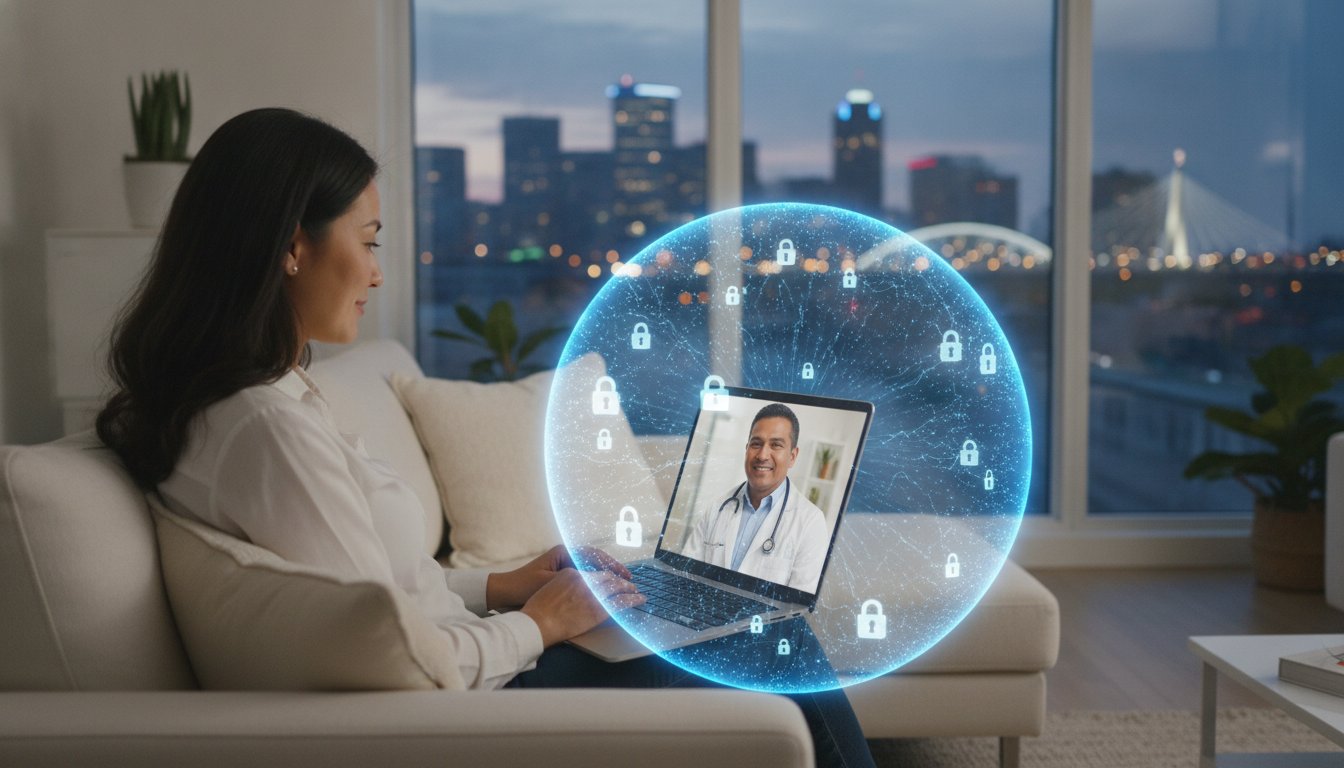
When you sit down for a medical appointment, you expect your conversation to stay within the walls of the exam room. What is Telehealth security? It’s the digital equivalent of those soundproof walls. It refers to the specific technical and administrative protocols designed to shield your personal health information (PHI) while you consult with a physician online. In a traditional Winnipeg clinic, your records are often kept in a physical folder, locked in a metal cabinet behind a reception desk. In the virtual world, we replace that cabinet with sophisticated layers of code. This transition ensures that telehealth data security manitoba standards are met, keeping your most sensitive details away from unauthorized eyes.
Encryption is the cornerstone of this protection. It sounds technical, but it’s actually a straightforward concept. It’s the process of turning your data into a complex, unreadable jumble of characters. Only the intended recipient, your doctor, has the unique “key” to unscramble that information. Without that key, the data is useless to anyone who might try to intercept it. This level of protection is often more robust than a paper file, which could be misplaced or seen by unauthorized staff in a busy, crowded office environment.
Privacy isn’t just a legal box to check; it’s a clinical necessity. If you don’t feel entirely safe in your digital environment, you might hold back details about your symptoms or lifestyle. This hesitation can lead to an incomplete diagnosis or an ineffective treatment plan. True healthcare requires total honesty, and that honesty only happens when you trust that your conversation is a private, protected interaction. We prioritize these digital safeguards so you can focus on your health rather than your data.
This focus on secure, technology-driven care is a hallmark of modern clinics; for instance, Optima Physical Therapy utilizes AI-powered systems to provide specialized concierge services that respect patient privacy.
Your Right to Privacy in Manitoba
Many people assume that online services are less regulated than physical ones. That’s a common myth. In our province, virtual care is a direct extension of the traditional medical system. You have the exact same rights to confidentiality during a video call as you do sitting in an exam room. It isn’t a “lite” version of medicine; it’s a professional service that must follow strict provincial laws. This ensures that telehealth data security manitoba remains a top priority, protecting your autonomy and your records regardless of how you access care.
What Data is Protected During a Visit?
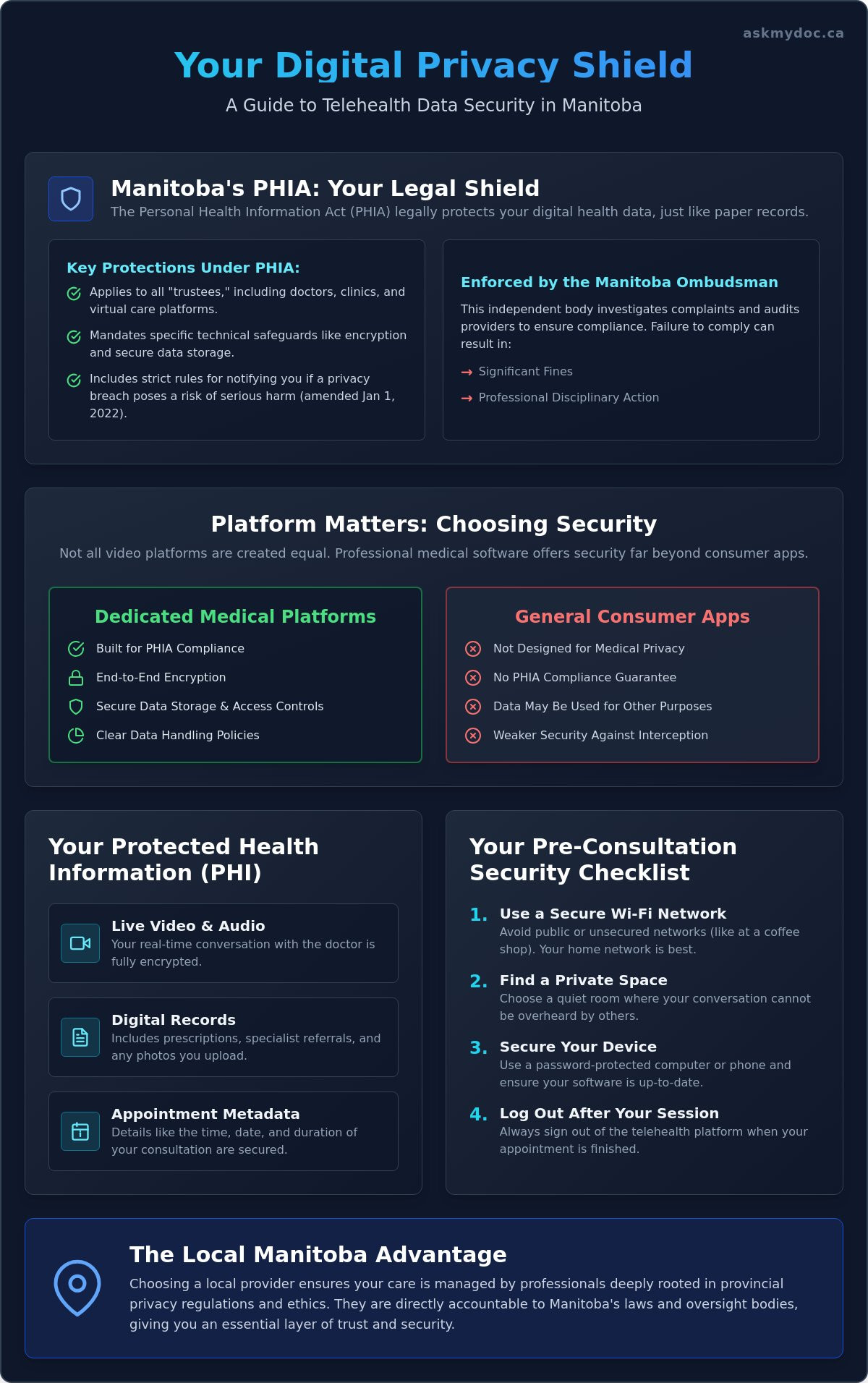
Every part of your interaction is covered by these security protocols. It isn’t just the words you say; it’s every piece of information that makes up the digital encounter. Protected data includes:
- Live video and audio streams: Ensuring no one can “eavesdrop” on your session.
- Digital records: This includes prescriptions issued and any photos you upload to show a symptom.
- Metadata: Information such as the time of your call and the duration of your appointment.
All these elements are part of your permanent, private record. Maintaining high standards for security means treating every byte of this data with the highest level of professional respect and care.
Manitoba’s PHIA: The Legal Shield for Your Data
In our province, your privacy isn’t just a promise; it’s a legal mandate. Manitoba’s Personal Health Information Act (PHIA) is the primary legislation that dictates how your data is handled. Since the most recent amendments came into force on January 1, 2022, the law has even stricter requirements for notifying you if a privacy breach occurs that poses a real risk of serious harm. It applies to any “trustee,” which includes doctors, clinics, and health authorities. This law ensures that telehealth data security manitoba isn’t left to chance. It requires healthcare providers to implement specific technical safeguards, such as encrypted networks and secure storage, to prevent unauthorized access.
The Manitoba Ombudsman acts as the watchdog for these regulations. They have the power to investigate complaints and audit health records to ensure compliance. This oversight is vital for maintaining telehealth data security manitoba across all platforms. If a provider fails to meet these standards, the consequences are severe. Legal penalties can include significant fines and professional disciplinary action. This oversight provides a safety net, ensuring that your virtual doctor visit is held to the same rigorous standards as a physical clinic in Winnipeg. Knowing there is a formal process for investigating complaints helps build the trust necessary for a successful digital health system.
PHIA vs. Other Privacy Laws
Many online health articles focus on Ontario’s PHIPA, but Manitobans should look specifically to PHIA for local relevance. One key difference is the mandatory use of Privacy Impact Assessments (PIAs) for virtual tools. These assessments are deep dives into how a software platform handles your data before it’s ever used for patient care. It’s a proactive way to catch security gaps before they become problems. Our platform follows the strict Manitoba Health framework to ensure every digital interaction meets provincial expectations for safety and reliability.
Consent in the World of Virtual Care
Consent works a bit differently in a digital space. When you book an appointment, “implied consent” often covers the basic use of the platform. However, for specific digital health services, we often seek “expressed consent” to ensure you fully understand how your data is shared. Under PHIA, your doctor is required to verify your identity using your health card and a government issued photo ID for your first consultation. This protects your identity and ensures your medical records remain accurate. You always maintain the right to withdraw your consent at any time. If you ever feel uncomfortable with the digital format, you can request a referral for an in-person visit instead. If you’re ready to experience a platform designed with these protections in mind, you can book your secure consultation with a local physician today.
Medical Platforms vs. Consumer Apps: Choosing Security
While it’s tempting to use familiar apps like FaceTime or WhatsApp for a quick chat, these tools aren’t built for healthcare. They lack the specialized architecture required by Manitoba’s Personal Health Information Act (PHIA). Professional medical platforms are designed from the ground up to protect patient confidentiality. One of the most critical features is End-to-End Encryption (E2EE). This means your data is encrypted from the moment it leaves your device until it reaches your doctor. No middleman, not even the platform provider, can access the content of your session. This is the gold standard for telehealth data security manitoba patients should expect.
Where your data is stored matters just as much as how it is sent. Consumer apps often route traffic through international servers, potentially exposing your information to foreign jurisdictions. Professional platforms ensure data residency remains within Canada. This keeps your medical history under the protection of Canadian privacy standards and local oversight. These platforms also prevent unauthorized recording. Unlike consumer apps where a simple screen record can capture a sensitive conversation, medical-grade software often disables these functions to maintain a truly private exam room environment. This controlled environment is essential for maintaining telehealth data security manitoba regulations.
The Vulnerabilities of Public Video Tools
Public apps are built for social connection, not clinical compliance. They lack the detailed audit logs that healthcare providers need to track who accessed a file and when. There’s also the persistent risk of data mining. Many free apps generate revenue by analyzing user behavior for advertising. In a medical context, this is unacceptable. Using purpose-built software like AskMyDoc.ca ensures your health concerns don’t become part of a digital advertising profile. It guarantees that your private health journey remains exactly that; private.
Security Features of Professional Telehealth
Professional platforms include layers of protection you won’t find on Skype. Multi-factor authentication (MFA) requires a second form of ID, such as a code sent to your phone, to prevent unauthorized logins. Automatic session timeouts are another vital tool. If you’re using a shared family computer and forget to log out, the system closes the session for you after a period of inactivity. These platforms also facilitate secure file transfers. Whether you’re receiving lab results or online doctor prescriptions, every document is sent through a secure, encrypted channel rather than a standard, vulnerable email inbox.
Patient Best Practices: How to Secure Your Appointment
While we invest heavily in technical safeguards, the most common threat to your privacy isn’t a hacker; it’s often your immediate surroundings. Maintaining telehealth data security manitoba standards is a shared responsibility between the provider and the patient. Think of your device as a digital doorway to a private exam room. If that doorway is open in a crowded space, the best encryption in the world can’t prevent a passerby from overhearing your medical history. True privacy begins with the choices you make before the video call even starts.
Your connection choice is your first line of defense. Public Wi-Fi networks, such as those found at a Winnipeg mall or local coffee shops, are notoriously insecure. These networks are often unencrypted, making it easy for others on the same network to monitor your activity. Always use a password-protected home network or a reliable cellular data connection for your appointments. If you must use a shared network, ensure your device’s firewall is active and avoid sharing any sensitive files until you’re back on a private connection.
Digital hygiene is equally important for a safe experience. Ensure your laptop, tablet, or smartphone is running the latest operating system. Manufacturers release security updates specifically to patch vulnerabilities that could be exploited by malicious software. Keeping your device current is a simple yet effective way to bolster your personal security. It ensures that the software you’re using to access care is as robust as the platform itself.
Finally, respect the “No Recording” rule. To maintain the integrity of the clinical environment, neither the patient nor the doctor should record the session without explicit, written consent from both parties. This policy protects the spontaneous and honest nature of the medical consultation. It ensures that your words are used only for your immediate care and are not stored in vulnerable formats like personal cloud drives or social media caches. These habits are essential for upholding telehealth data security manitoba expectations.
Creating a Private Space at Home
Using headphones is a small step that makes a big difference. It ensures the doctor’s voice isn’t broadcast to everyone in your home. If you share a living space, consider placing a “Do Not Disturb” sign on your door. This helps ensure your virtual healthcare in Winnipeg remains a strictly one-on-one conversation. Never take a medical call in a public space or while driving. Both scenarios present significant risks to your privacy and your physical safety.
Preparing Your Device for a Secure Visit
Before your visit starts, close any background apps that don’t need to be open. Some social media or gaming apps may have permissions to access your camera or microphone, which can cause technical conflicts or security risks. Double-check your browser to ensure it’s up to date. Most importantly, always verify that your appointment link comes from a legitimate AskMyDoc.ca domain. If you’re ready to put these best practices to use, you can book your secure appointment today and speak with a local professional.
Privacy First at AskMyDoc.ca: Your Winnipeg-Based Care
Choosing a local provider means you aren’t just another user in a global database. At AskMyDoc.ca, we integrate privacy into every step of the patient journey. We recognize that telehealth data security manitoba is about more than just software; it’s about the trust between a patient and their local caregiver. Our team coordinates care from Winnipeg, ensuring that our operations align perfectly with provincial expectations and community values. We treat your digital files with the same reverence a traditional clinic treats a locked cabinet of paper records. This local focus means our accountability isn’t tucked away in a different time zone; it’s right here in our own community.
Our licensed Manitoba physicians play a pivotal role in this security framework. They bring their traditional professional ethics into the digital space, ensuring that every consultation is handled with the same discretion as an in-person visit. These doctors are members of the College of Physicians & Surgeons of Manitoba, meaning they are bound by local professional oaths that prioritize patient confidentiality above all else. This human element provides a final, essential layer of protection that generic, international apps simply cannot match. When you speak with our doctors, you’re speaking with professionals who are integrated into the same health system you navigate every day.
We believe in transparency regarding your medical records. If you ever have a specific question about where your data is stored or how it is accessed, our local support team is ready to provide clear, direct answers. You aren’t navigating a complex international corporate structure when you have a concern. Instead, you’re dealing with neighbors who value your privacy as much as you do. We are committed to ensuring you feel in control of your health information at every stage of your journey. This open communication is part of our promise to keep your virtual experience as grounded and reliable as a visit to your family doctor.
Our Local Commitment to Data Security
AskMyDoc.ca is a Manitoba-based company, which means we live and work under the same laws as our patients. We maintain full compliance with the Personal Health Information Act (PHIA) and federal PIPEDA standards. This dual layer of protection ensures your information is handled with the highest level of care. Our internal protocols for telehealth data security manitoba go beyond the basics to include rigorous auditing of all record access. Even the way we handle prescriptions is designed for safety. Instead of sending sensitive details through unencrypted email, we transmit orders directly and securely to your chosen pharmacy, significantly reducing the risk of interception or clerical errors.
Ready for a Secure Virtual Consultation?
It is time to move past the idea that digital care is a compromise. Asking a doctor online through a dedicated medical platform is a secure, efficient, and professional way to manage your health. With our same-day booking options, you can get the care you need without the long waits or the privacy risks of crowded waiting rooms. You can trust that your medical information is safe, confidential, and handled by experts who care about the Manitoba community. Book your secure visit with an AskMyDoc.ca doctor today and experience the future of private, local healthcare.
Experience Secure Healthcare from the Comfort of Home
Your medical history is your most personal data. Protecting it requires more than just a strong password; it demands a system built on the legal foundation of PHIA and the technical strength of medical-grade encryption. By choosing professional platforms over generic consumer apps and practicing good digital hygiene, you ensure your consultations remain private. Maintaining high standards for telehealth data security manitoba means you never have to choose between convenience and confidentiality.
We provide a PHIA-compliant secure platform staffed by licensed Manitoba physicians who understand the needs of our community. Our virtual consultations are 100% free for Manitoba Health card holders, offering you expert care with total peace of mind. You can manage your health journey with confidence, knowing your information is handled with the highest level of professional integrity at every step.
Your health doesn’t have to wait for a physical opening. Book Your Secure Virtual Appointment Today and experience the ease of modern, safe healthcare. We’re here to provide the steady hand and expert care you deserve, right when you need it most.
Frequently Asked Questions
Is my virtual doctor visit recorded by the clinic?
No, your virtual visit is not recorded. Professional medical platforms facilitate a live, real-time consultation without saving video or audio files. This ensures your conversation remains as ephemeral and private as an in-person meeting in a physical office. The only permanent record created is the standard clinical note your doctor writes in your medical file, just as they would during a traditional appointment.
Can hackers listen to my telehealth appointment?
It is extremely difficult for unauthorized parties to intercept your call. We use bank-level encryption to ensure telehealth data security manitoba standards are upheld at all times. This technology scrambles the digital signal so that even if it were intercepted, the data would be completely unreadable to anyone without the unique digital key held only by you and your physician.
Where is my medical information stored after an online visit?
Your data is stored on secure, encrypted servers located within Canada. This ensures that your personal information remains under the protection of Canadian privacy laws like PHIA and PIPEDA. Unlike many consumer apps that route traffic through international servers, professional medical platforms prioritize local data residency to maintain strict oversight and provincial compliance.
Does Manitoba Health cover the cost of secure virtual care?
Yes, Manitoba Health covers the cost of virtual consultations for all valid provincial health card holders. The service is billed directly to the province, meaning there are no out-of-pocket fees for your appointment. This ensures that every Manitoban can access high-quality, secure medical care without financial barriers, regardless of whether the visit is in person or online.
Is it safe to send photos of my symptoms to a virtual doctor?
It is safe as long as you use the secure, encrypted upload tool within the medical platform. You should avoid sending photos via standard email or text message, as these channels are not typically protected. Using our internal system ensures your images are shielded by the same telehealth data security manitoba protocols that protect your live video consultation.
Who has access to my virtual health records in Manitoba?
Access is strictly limited to your healthcare provider and the authorized clinical staff involved in your direct care. Every instance of someone viewing your record is logged in an audit trail. This ensures that your information is only accessed by those who need it to provide your medical treatment, maintaining a controlled environment that prevents unauthorized viewing.
What should I do if I think my privacy was breached during a call?
You should immediately notify the clinic management to report your concern. You also have the right to contact the Manitoba Ombudsman to file a formal complaint and request an investigation. Under the 2022 amendments to PHIA, healthcare providers are legally required to notify you of any privacy breach that poses a real risk of serious harm.
Is virtual care privacy the same for mental health consultations?
Yes, the privacy standards for mental health consultations are identical to those for physical health visits. All virtual care in the province must comply with the same PHIA regulations, regardless of the medical specialty. Your mental health history receives the same rigorous encryption and legal protection as any other part of your provincial medical record.